Why it's here:
Hailed as the last great silent film, this is an interesting piece. It is not exactly silent. There are sound effects and some minimal dialog. The film utilized "sound" but it did not showcase it. It is made like a silent film -- with a silent ethos and a visual comedic style. And it is a masterpiece.
Specs:
Hour and a half, black and white, silent (sort of)
Our family's average rating (on a scale of 1-10):
8.0
More about the film and our reaction to it:
First of all and most unexpected was the amazing Paulette Goddard - who is impossibly beautiful. I'd heard of her before but never seen her in anything. She has a modern look, expressions and movements, and reminded me palpably of Courtney Cox, only more beautiful. She is an extremely appealing co-star, but ultimately, the film is Chaplin's.
He is simply remarkable in this wonderful story of the down and out Tramp -- his last screen appearance as such. Chaplin was loathe to enter the sound era and did so only grudgingly. He made this film years after everyone else had given up the ghost of silents. But in holding on and in releasing this, he made me realize why everyone should have been loathe to give up the silent era. This type of comedy may not ever be seen on a large scale again, but it is superb and is still extremely watchable.
Chaplin's Tramp starts out the film as a worker in a factory assembly line on funny machinery doing funny maneuvers to the machine parts. Through various mishaps he is in and out of jail and various other jobs for the rest of the movie, linking up part way through with a spunky poverty stricken girl trying to make the best of life for herself and her little sister. Chaplin and Goddard do manage to achieve a great measure of success and togetherness, and slink off into the sunset together, but not before Chaplin performs the funniest song ever.
Interestingly, though this is a "silent" with little dialog and though Chaplin does not speak in the movie, he does sing. His song is the first time his voice had ever been heard on camera! The routine is a nonsense song accompanied by pantomime and it's hard to describe why, but is very very funny. We watched and re-watched the scene on Youtube more times then I'd care to know.
Iconic shot:
The banner image gracing the top of this website is the most iconic shot from the movie. So, for this post, I'll share one of Goddard.
Read our reviews, recommendations, and commentary on classic movies. All with an eye toward family viewing.
Tuesday, July 31, 2012
Saturday, July 28, 2012
Top Hat (1935)
Why it's here:
We needed more musicals! We needed to see the iconic dance team of Astair and Rogers. There is nothing better than Top Hat for that.
Specs:
Just over an hour and a half, black and white; available on dvd
Our family's average rating (on a scale of 1-10):
8.13
More about the film and our reaction to it:
You just never know how your kids are going to respond to a movie. I was sure they'd both be into it. They both really respond to Cary Grant, and Fred Astair always seemed to me like Cary Grant on wheels, just light airy flirty and cool. They liked Astair well enough, but weren't blown away enough by his dancing the way I wanted them to be! Astair dances in my favorite style - so light and graceful, so easy on the eyes. My younger child was far more interested in this film than the older, but he tends to have more patience for things like singing and dancing.
In any case, this is a wonderful film. I can almost picture it being in color (though it was black and white), the costumes and sets are vibrant and classy and really have a sparkly feel about them. The plot relies upon a fair amount of innuendo and involves misunderstandings about cheating husbands. Its good to know that going in... There's also a fair amount of threatened violence too ("for the man, the sword! for the woman, the kiss" is a line we still repeat).
I love the film and would recommend it generally. If it happens to strike a chord with those at your house it might be a big hit. If not, oh well, its still great to see Astair and Rogers. Everyone should.
Iconic shot:
We needed more musicals! We needed to see the iconic dance team of Astair and Rogers. There is nothing better than Top Hat for that.
Specs:
Just over an hour and a half, black and white; available on dvd
Our family's average rating (on a scale of 1-10):
8.13
More about the film and our reaction to it:
You just never know how your kids are going to respond to a movie. I was sure they'd both be into it. They both really respond to Cary Grant, and Fred Astair always seemed to me like Cary Grant on wheels, just light airy flirty and cool. They liked Astair well enough, but weren't blown away enough by his dancing the way I wanted them to be! Astair dances in my favorite style - so light and graceful, so easy on the eyes. My younger child was far more interested in this film than the older, but he tends to have more patience for things like singing and dancing.
In any case, this is a wonderful film. I can almost picture it being in color (though it was black and white), the costumes and sets are vibrant and classy and really have a sparkly feel about them. The plot relies upon a fair amount of innuendo and involves misunderstandings about cheating husbands. Its good to know that going in... There's also a fair amount of threatened violence too ("for the man, the sword! for the woman, the kiss" is a line we still repeat).
I love the film and would recommend it generally. If it happens to strike a chord with those at your house it might be a big hit. If not, oh well, its still great to see Astair and Rogers. Everyone should.
Iconic shot:
Labels:
1930s,
Fred Astair,
genre: musicals,
Ginger Rogers
Friday, July 27, 2012
Becky Sharp (1935)
Why it's here:
There's only one reason for Becky Sharp to be on our list: it is the first major film release done in full Technicolor.
Specs:
Hour and a half, COLOR. Available on youtube.
The film is set in Victorian England.
Our family's average rating (on a scale of 1-10):
4.75
More about the film and our reaction to it:
Becky Sharp is the main character in William Thackery's "Vanity Fair." I've seen a more modern adaptation of the story and wouldn't have necessarily thought this was a great option for family viewing, but we chose it on the sole criterion of it's being the "first" color film (see note on "B&W to Color" for qualifiers). It is interesting to note that the transition in Hollywood from black and white to color was a much much slower one than the transition from silent to sound. Although Becky Sharp marks the first technicolor entry in our festival, the great bulk of films being made for the next 20 years will still be in black and white.
The color in Becky Sharp was not as vibrant or beautiful as in The Adventures of Robin Hood or Gone With the Wind, but it is still impressive as an achievement and fun to see after so many years of black and white. Unfortunately, we had to watch this on Youtube, as we couldn't find it elsewhere, and that presented a hurdle to our enjoyment -- the resolution was not great and did not showcase the Technicolor to its best advantage. And since the Technicolor was the major selling point for us, it ended up being a bit of a flop. Although this is a landmark film, technically speaking, it has not become an enduring classic.
Becky Sharp is a pretty run of the mill period drama. The underlying story is a good one and tells the tale of a very scheming and ruthless woman who uses people (especially men) to get ahead in the world. She makes Scarlett O'Hara look kind and sympathetic by comparison. We didn't actually watch the whole film but maybe the first half, and then skimmed to the end. If you are a fan of period drama you might enjoy this, otherwise we would suggest you pass on it -- or just watch a bit to experience the technological wonder of three-strip Technicolor!
Iconic shot:
There's only one reason for Becky Sharp to be on our list: it is the first major film release done in full Technicolor.
Specs:
Hour and a half, COLOR. Available on youtube.
The film is set in Victorian England.
Our family's average rating (on a scale of 1-10):
4.75
More about the film and our reaction to it:
Becky Sharp is the main character in William Thackery's "Vanity Fair." I've seen a more modern adaptation of the story and wouldn't have necessarily thought this was a great option for family viewing, but we chose it on the sole criterion of it's being the "first" color film (see note on "B&W to Color" for qualifiers). It is interesting to note that the transition in Hollywood from black and white to color was a much much slower one than the transition from silent to sound. Although Becky Sharp marks the first technicolor entry in our festival, the great bulk of films being made for the next 20 years will still be in black and white.
The color in Becky Sharp was not as vibrant or beautiful as in The Adventures of Robin Hood or Gone With the Wind, but it is still impressive as an achievement and fun to see after so many years of black and white. Unfortunately, we had to watch this on Youtube, as we couldn't find it elsewhere, and that presented a hurdle to our enjoyment -- the resolution was not great and did not showcase the Technicolor to its best advantage. And since the Technicolor was the major selling point for us, it ended up being a bit of a flop. Although this is a landmark film, technically speaking, it has not become an enduring classic.
Becky Sharp is a pretty run of the mill period drama. The underlying story is a good one and tells the tale of a very scheming and ruthless woman who uses people (especially men) to get ahead in the world. She makes Scarlett O'Hara look kind and sympathetic by comparison. We didn't actually watch the whole film but maybe the first half, and then skimmed to the end. If you are a fan of period drama you might enjoy this, otherwise we would suggest you pass on it -- or just watch a bit to experience the technological wonder of three-strip Technicolor!
Iconic shot:
Labels:
1930s,
genre: period drama
A Night at the Opera (1935)
Why it's here:
Truth be told, I am not a huge Marx Brothers fan, but felt they needed to be in the festival. This was supposed to be one of their best.
Specs:
About an hour and a half, black and white. Available on dvd
Our family's average rating (on a scale from 1-10):
7.0
More about the movie and our reaction to it:
Its been a while now since we watched this and I'm finding I'm fuzzy on the plot details. Hmmm... lets see... there is a basic backdrop of opera singers travelling on a boat and the brothers somehow or other being mixed up in matchmaking while trying to make some money... The point is, I'm not sure the plot matters all that much to enjoying a Marx brothers' movie. The are simply funny - individually and collectively - regardless of what they're doing and why. Groucho with his one-liners may be the most famous, but we responded more to Harpo who is silent and a more physical comedian -- the one who uses his little horn to communicate. There's a brother for everyone's taste. Chico has a very funny bit playing piano that had us mesmerized too. One of the best parts of the movie was Groucho's banter with Chico about signing a contract.
The whole thing is light, fluffy, meaningless and pretty enjoyable. It did get off to a slow start and bog down a bit (for us) during the longer opera performances (we're pretty low-brow I guess), but overall well recommended.
Iconic shot:
Truth be told, I am not a huge Marx Brothers fan, but felt they needed to be in the festival. This was supposed to be one of their best.
Specs:
About an hour and a half, black and white. Available on dvd
Our family's average rating (on a scale from 1-10):
7.0
More about the movie and our reaction to it:
Its been a while now since we watched this and I'm finding I'm fuzzy on the plot details. Hmmm... lets see... there is a basic backdrop of opera singers travelling on a boat and the brothers somehow or other being mixed up in matchmaking while trying to make some money... The point is, I'm not sure the plot matters all that much to enjoying a Marx brothers' movie. The are simply funny - individually and collectively - regardless of what they're doing and why. Groucho with his one-liners may be the most famous, but we responded more to Harpo who is silent and a more physical comedian -- the one who uses his little horn to communicate. There's a brother for everyone's taste. Chico has a very funny bit playing piano that had us mesmerized too. One of the best parts of the movie was Groucho's banter with Chico about signing a contract.
The whole thing is light, fluffy, meaningless and pretty enjoyable. It did get off to a slow start and bog down a bit (for us) during the longer opera performances (we're pretty low-brow I guess), but overall well recommended.
Iconic shot:
Monday, July 23, 2012
The Thin Man (1934)
Why it's here:
Although I'd never watched a Thin Man, I'd always wanted to. It seemed enough of a cultural icon to include in the festival.
Specs:
An hour and a half, black and white. After this first Thin Man was so successful, another 5 movies were released in series over the next 13 years.
Our family's average rating on a scale of 1-10:
7.75
More about the film and our reaction to it:
I've heard it said about The Thin Man that it makes marriage look fun. This is absolutely true. Myrna Loy and William Powell have the most charming chemistry as the detective husband and rich dilettante wife who, unlike modern funny screen couples, actually seem to like each other, which is palpably refreshing. They are both sympathetic characters and equally matched so that their witty banter is a total joy. Another great reason to watch The Thin Man is to get acquainted with Asta, the dog, who is a sweetheart and, according to my husband, comes up constantly in crossword puzzles. So keep that in mind as you go through life.
We found William Powell to be a very charismatic star. He looks a bit like Clark Gable but is more dignified and smooth. We liked him enough to add a couple more of his movies to our list.
The underlying detective story is a good one. Never having been a huge fan of the genre I can't speak for how it compares to others, but it had us all highly engaged and surprised with the plot twists.
I don't think I could call this a family movie guide if I didn't at least mention the fact that the characters in this movie drink massive amounts of alcohol constantly. While old movies in general do tend to contain quite a bit of imbibing (even/especially the prohibition era ones), the consumption portrayed in this one was positively remarkable.
Iconic image:
Although I'd never watched a Thin Man, I'd always wanted to. It seemed enough of a cultural icon to include in the festival.
Specs:
An hour and a half, black and white. After this first Thin Man was so successful, another 5 movies were released in series over the next 13 years.
Our family's average rating on a scale of 1-10:
7.75
More about the film and our reaction to it:
I've heard it said about The Thin Man that it makes marriage look fun. This is absolutely true. Myrna Loy and William Powell have the most charming chemistry as the detective husband and rich dilettante wife who, unlike modern funny screen couples, actually seem to like each other, which is palpably refreshing. They are both sympathetic characters and equally matched so that their witty banter is a total joy. Another great reason to watch The Thin Man is to get acquainted with Asta, the dog, who is a sweetheart and, according to my husband, comes up constantly in crossword puzzles. So keep that in mind as you go through life.
We found William Powell to be a very charismatic star. He looks a bit like Clark Gable but is more dignified and smooth. We liked him enough to add a couple more of his movies to our list.
The underlying detective story is a good one. Never having been a huge fan of the genre I can't speak for how it compares to others, but it had us all highly engaged and surprised with the plot twists.
I don't think I could call this a family movie guide if I didn't at least mention the fact that the characters in this movie drink massive amounts of alcohol constantly. While old movies in general do tend to contain quite a bit of imbibing (even/especially the prohibition era ones), the consumption portrayed in this one was positively remarkable.
Iconic image:
Labels:
1930s,
genre: mystery,
Myrna Loy,
William Powell
Saturday, July 14, 2012
It Happened One Night (1934)
Why it's here:
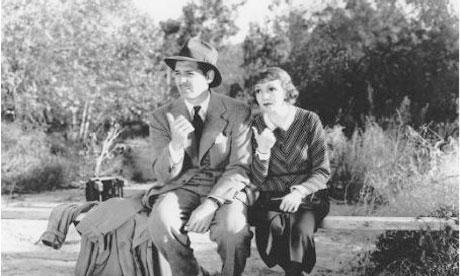
Directed by Frank Capra, starring Clark Gable and Claudette Colbert, this has to be one of the best and funniest movies of all time.
Specs:
1 hr and 45 minutes long. Black and white. A talkie that finally makes you glad that sound has arrived!
Family's average rating (on a scale of 1-10):
A whopping 9.0, which is our highest collective rating for any film in the festival (through 1941 anyway).
More about the film and our reaction to it:
I always knew it was a good idea to work forward in time through classic movies, but now, excuse my vanity, I really see the genius behind the plan. Watching It Happened One Night after several weeks of experience with silents and transition era films just blew us away . . . the way it should have. I can fully appreciate why this movie swept the Academy Awards and has gone down in history as the classic romantic comedy of all time, the first screwball comedy, a Frank Capra masterpiece and yet -- simultaneously had been the film no one expected to succeed.
Most involved in the project seemed to think it was a crummy waste of time (Claudette Colbert, at the end of filming, famously told a friend: "I just finished the worst picture of my life;" Clark Gable was given the assignment as punishment). To explain the paradox, you have to set yourself in 1934 when movies just weren't like this. People couldn't easily see the value of doing something like watching two people travel along the countryside taking little quips at each other and falling in love. It must have been hard to picture, until it all came together.
This film feels like a major leap forward in cinematic style, just swooping cleanly in with total understanding of the beauties of dialog. It is extremely effective at telling a smart, well-acted, and seamlessly audible story.
Gable, in an atypical role, and Colbert have wonderful chemistry. Although the film is regarded as the genesis of the "screwball" style of comedy, this might be better heralded as the birth of romantic comedy -- back before that meant "chick flick". The talents of Gable -- unquestionably a guy's guy -- keeps the film just a tiny bit rougher and gritty, very appealing to men. I can attest that all of the men at my house loved this film.
Iconic shot:
Directed by Frank Capra, starring Clark Gable and Claudette Colbert, this has to be one of the best and funniest movies of all time.
Specs:
1 hr and 45 minutes long. Black and white. A talkie that finally makes you glad that sound has arrived!
Family's average rating (on a scale of 1-10):
A whopping 9.0, which is our highest collective rating for any film in the festival (through 1941 anyway).
More about the film and our reaction to it:
I always knew it was a good idea to work forward in time through classic movies, but now, excuse my vanity, I really see the genius behind the plan. Watching It Happened One Night after several weeks of experience with silents and transition era films just blew us away . . . the way it should have. I can fully appreciate why this movie swept the Academy Awards and has gone down in history as the classic romantic comedy of all time, the first screwball comedy, a Frank Capra masterpiece and yet -- simultaneously had been the film no one expected to succeed.
Most involved in the project seemed to think it was a crummy waste of time (Claudette Colbert, at the end of filming, famously told a friend: "I just finished the worst picture of my life;" Clark Gable was given the assignment as punishment). To explain the paradox, you have to set yourself in 1934 when movies just weren't like this. People couldn't easily see the value of doing something like watching two people travel along the countryside taking little quips at each other and falling in love. It must have been hard to picture, until it all came together.
This film feels like a major leap forward in cinematic style, just swooping cleanly in with total understanding of the beauties of dialog. It is extremely effective at telling a smart, well-acted, and seamlessly audible story.
Gable, in an atypical role, and Colbert have wonderful chemistry. Although the film is regarded as the genesis of the "screwball" style of comedy, this might be better heralded as the birth of romantic comedy -- back before that meant "chick flick". The talents of Gable -- unquestionably a guy's guy -- keeps the film just a tiny bit rougher and gritty, very appealing to men. I can attest that all of the men at my house loved this film.
Iconic shot:
The Music Box (1932)
Why it's here:
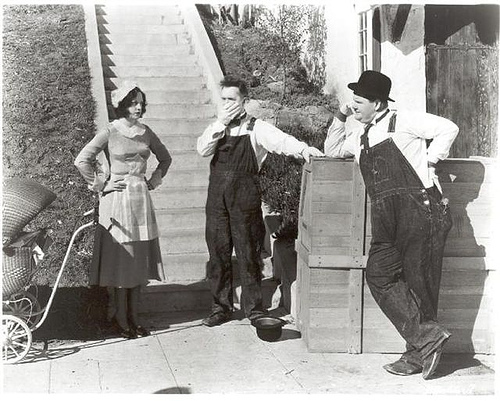
Famous Laurel and Hardy movie where they attempt to move a piano up a huge flight of steps.
Specs:
Just a half hour long. Black and white, sound film.
Our family's average rating (on a scale from 1-10):
7.25
More about the movie and our reaction to it:
This was a very funny and enjoyable movie. It was our introduction to Laurel and Hardy and a good one for that purpose. The plot is quite simple, they've gone into business as a moving team and are hired to deliver a piano. The fun begins when we see where the house they're delivering to is located -- an endless flight of stairs going up a hill.
We laughed out loud throughout this memorable short film.
Iconic shot:
Famous Laurel and Hardy movie where they attempt to move a piano up a huge flight of steps.
Specs:
Just a half hour long. Black and white, sound film.
Our family's average rating (on a scale from 1-10):
7.25
More about the movie and our reaction to it:
This was a very funny and enjoyable movie. It was our introduction to Laurel and Hardy and a good one for that purpose. The plot is quite simple, they've gone into business as a moving team and are hired to deliver a piano. The fun begins when we see where the house they're delivering to is located -- an endless flight of stairs going up a hill.
We laughed out loud throughout this memorable short film.
Iconic shot:
Labels:
1930s,
genre: comedy,
Oliver Hardy,
Stan Laurel
The Broadway Melody (1929)
Why it's here:
In response to our disappointment with The Jazz Singer, I searched for a real first introduction to sound. This one, billed as the first "all talking, all singing, all dancing" sound film seemed to fill the bill.
Specs:
About 2 hours. Black and white (was actually released with a short two-color Technocolor sequence for one of its big song numbers; however, that sequence is now believed to be lost.) It is available on dvd; our library actually had a copy. Talkie -- a real talkie all the way through. For more info about the transition from Silents to Sound, check out that topic.
Our family's average rating (on a scale of 1-10):
More about the film and our reaction to it:
The "thrill" of seeing a movie with dialog after 20 films, amounting to nearly 30 years of silents, was not inconsequential to us. We got to feel some part of what audiences at the time must have felt to have been able to listen to a movie.
However, once the initial excitement has passed, you are left (again) with a fairly second-rate picture. This was a melodramatic story underpinning a pretty good musical, but just too over the top for our tastes. The love story was a bit seedy and harsh - with a lecherous rich guy preying on the ingenue and an older sister's fiance falling for same ingenue.
It's interesting for the opening footage taken (probably from a plane) looking down at New York City. Incredible. And for the glimpses into the backstage inner workings of a Broadway show.
Iconic shot:
In response to our disappointment with The Jazz Singer, I searched for a real first introduction to sound. This one, billed as the first "all talking, all singing, all dancing" sound film seemed to fill the bill.
Specs:
About 2 hours. Black and white (was actually released with a short two-color Technocolor sequence for one of its big song numbers; however, that sequence is now believed to be lost.) It is available on dvd; our library actually had a copy. Talkie -- a real talkie all the way through. For more info about the transition from Silents to Sound, check out that topic.
Our family's average rating (on a scale of 1-10):
6.0
The "thrill" of seeing a movie with dialog after 20 films, amounting to nearly 30 years of silents, was not inconsequential to us. We got to feel some part of what audiences at the time must have felt to have been able to listen to a movie.
However, once the initial excitement has passed, you are left (again) with a fairly second-rate picture. This was a melodramatic story underpinning a pretty good musical, but just too over the top for our tastes. The love story was a bit seedy and harsh - with a lecherous rich guy preying on the ingenue and an older sister's fiance falling for same ingenue.
It's interesting for the opening footage taken (probably from a plane) looking down at New York City. Incredible. And for the glimpses into the backstage inner workings of a Broadway show.
Iconic shot:
Labels:
1920s,
genre: musicals,
talkies
Subscribe to:
Posts (Atom)